
The Pilates Reformer Explained: Why It Feels So Precise
The Origin of the Reformer Method
The Pilates method was developed by Joseph Hubertus Pilates in the early 20th century. During World War I, he was interned in England, where he worked assisting injured soldiers who were unable to stand or perform traditional strengthening exercises. To help them regain movement safely, he attached springs to hospital beds so patients could move their limbs while supported.
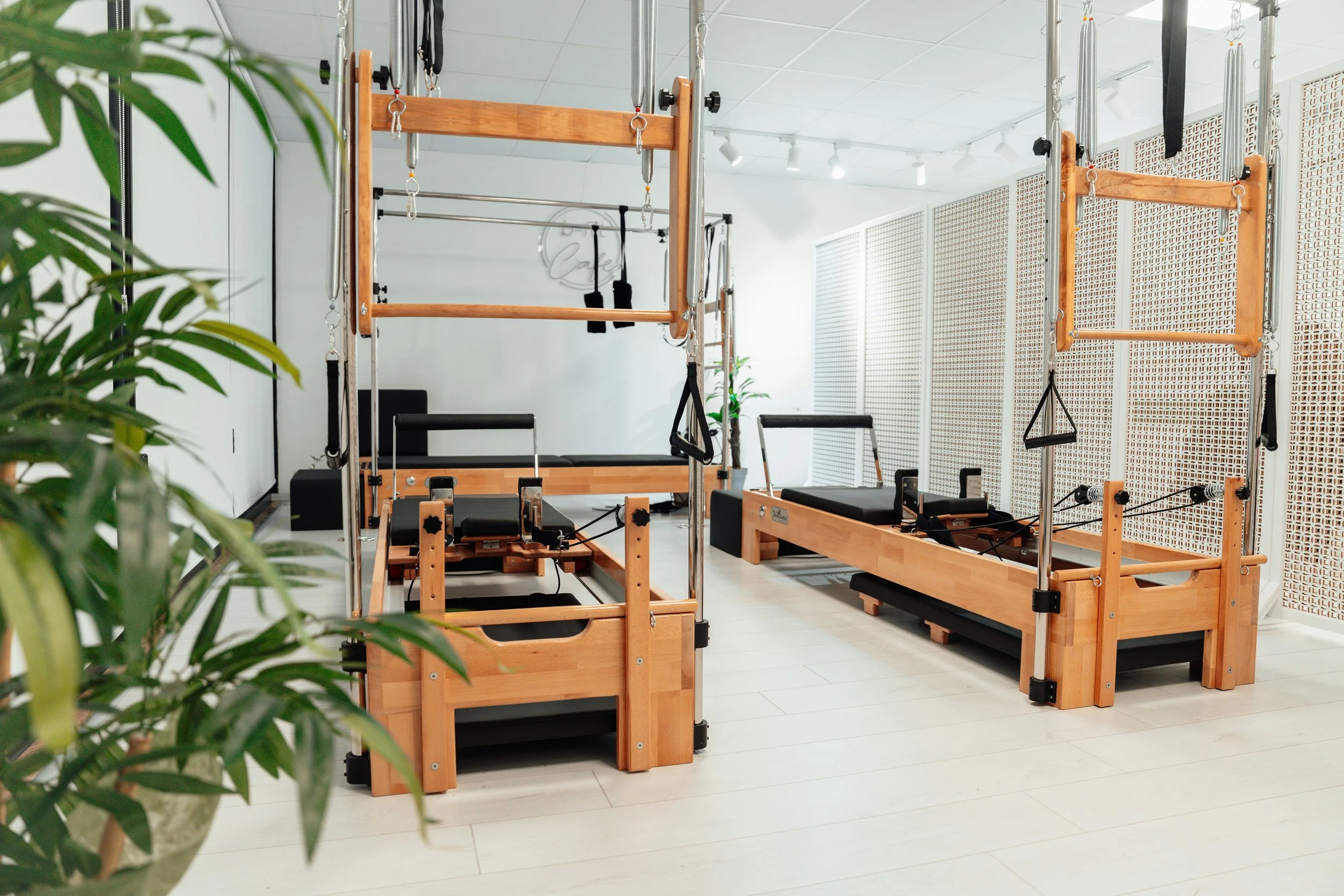
This system allowed movement before full strength returned. Instead of forcing muscles to work against gravity, the springs guided motion and reduced joint stress. Over time, this apparatus evolved into what is now known as the Pilates reformer.
Modern pilates reformer Punta del Este sessions still follow this original principle: movement quality first, strength second. The equipment was never designed primarily for fitness intensity, but for restoring efficient patterns of movement.
(Reference: Pilates Method Alliance historical archives and Joseph Pilates’ book Return to Life Through Contrology, 1945)
Why Springs Work Differently Than Weights
Traditional gym equipment relies on gravity. Resistance is constant and compressive, meaning joints often bear load at their most vulnerable positions. The reformer behaves differently because springs provide progressive resistance. The force changes throughout the movement, assisting at certain angles and challenging at others.
This variable resistance encourages muscles to cooperate instead of dominating. Large superficial muscles cannot simply overpower the movement, so smaller stabilizing muscles become active. The nervous system learns timing rather than force.
For many people attending pilates classes in English Punta del Este, this is why exercises feel controlled instead of exhausting. The body is not trying to overcome weight — it is learning how to organize effort.
(Reference: Latey, Penelope — The Pilates Method: History and Philosophy, Journal of Bodywork and Movement Therapies)
Neuromuscular Training and Posture
The reformer is often described as strength training, but it is closer to motor control training. The carriage moves only when the body stabilizes correctly. If alignment is lost, the movement becomes harder immediately, providing feedback to the brain.
This feedback loop is important because posture is largely automatic. The brain stores movement strategies and repeats them unconsciously. Reformer exercises retrain those strategies through repetition of coordinated patterns rather than muscular fatigue.
Students practicing an English pilates class Maldonado often notice they sit and stand differently without thinking about corrections. The change happens because the nervous system adopted a more efficient baseline pattern.
Breathing and Spinal Mechanics
Breathing plays a central role in Pilates training. The diaphragm, ribs, and deep abdominal muscles form a pressure system that stabilizes the spine. When breathing is shallow or restricted, other muscles compensate to hold posture, often creating neck and lower back tension.
Reformer exercises integrate breathing with motion so stabilization occurs naturally rather than through bracing. Over time, this reduces unnecessary muscular effort and allows freer movement.
For people searching for pilates in Maldonado, Uruguay, due to recurring stiffness, this is often the first noticeable improvement: less effort required to maintain upright posture.
Why It Is Widely Used Today
Today, the reformer is used not only in studios but also in rehabilitation and preventive training environments because resistance can be adapted precisely. It can support beginners, challenge athletes, and assist active aging populations while maintaining joint safety.
Unlike many exercise systems, it does not replace other activities but prepares the body for them. Walking, tennis, swimming, and daily tasks feel smoother because the body distributes load more efficiently.
This is why many pilates Uruguay expats include reformer sessions as part of a long-term routine rather than a temporary fitness phase.
Practicing the Method Locally
Understanding the reformer requires clear instruction and gradual progression so the body can interpret the feedback correctly. In pilates classes in English in Punta del Este, communication helps students connect the sensation with the purpose of the movement.
At UruPilates, Zohreh Ellison teaches the method with emphasis on awareness and control so improvements carry into everyday life and support an active lifestyle in Maldonado and Punta del Este.
Frequently Asked Questions About Reformer Pilates
Is reformer Pilates better than gym workouts?
They serve different purposes. Gym workouts mainly improve cardiovascular fitness and general strength, while reformer Pilates focuses on movement quality, joint alignment, and coordination. Many people combine both, but those experiencing recurring stiffness or posture issues often benefit from improving movement patterns first through Pilates before increasing intensity.
Is Pilates good for back pain?
Pilates is widely recommended for managing recurring back discomfort because it trains the deep stabilizing muscles that support the spine and improves how the body distributes load during daily movement. Instead of forcing flexibility or strength, it teaches the body to move with less strain, which may reduce tension over time.
What makes the reformer different from mat Pilates?
Mat Pilates relies mostly on body weight and gravity. The reformer uses spring resistance that assists and challenges movement at the same time. This provides feedback to the body and helps guide alignment, making it especially useful for beginners, posture improvement, and controlled strengthening.
Can beginners do reformer Pilates?
Yes. The reformer was originally created for rehabilitation, so exercises can be adjusted to very gentle levels. Because resistance is customizable, beginners often find it easier to learn correct movement patterns compared to large group workouts.
Why take a Pilates class in English in Punta del Este?
For native English speakers, understanding instructions clearly helps apply corrections immediately and improves results. Many local residents also enjoy practicing English in a relaxed environment while exercising, making the class both educational and social.
How often should I practice Pilates?
Most people benefit from two to three sessions per week. Consistency matters more than intensity because Pilates trains movement habits, and repetition allows the body to adopt healthier patterns over time.